

Names carry meaning far beyond their syllables. A name rooted in the concept of void, emptiness, or the abyss speaks to mystery, infinite potential, and the philosophical depth that exists at the edge of existence itself.
These are not hollow names. They are names that carry weight precisely because of what they representthe silent space before creation, the boundless unknown, the stillness between worlds.
Whether you are building a fantasy universe, searching for a powerful character name, choosing something rare for a baby, or simply fascinated by the linguistic and mythological history of emptiness across cultures, this is the most comprehensive guide available. From ancient Greek and Sanskrit to Japanese and Norse, names that mean void carry stories as old as existence.
The Benefits of Choosing Names That Mean Void
Before exploring the full collection, understanding why these names resonate so strongly helps you choose with intention.
1. Deep Symbolism and Meaning
Void names carry layers of meaning that most conventional names simply cannot match. In philosophy, the void is not absenceit is potential.
In Buddhism, sunyata (emptiness) is a state of liberation, not lack. In ancient cosmology, the void preceded creation itself. A name rooted in these traditions immediately connects the bearer to something profound, universal, and timeless.
The symbolism works on multiple levels simultaneously. In character design, a name meaning void tells readers or players something essential about that character before they even appear. In personal naming, it signals depth, originality, and a parent who thinks carefully about meaning.
2. Unique and Timeless Appeal
Void-themed names are rare enough to stand out in any naming context but grounded in ancient language roots that give them credibility and timelessness. Names like Erebus, Nyx, Mu, and Nihil are not invented trendsthey come from linguistic and mythological traditions thousands of years old.
In an era where parents, writers, and worldbuilders are all seeking names that feel genuinely distinctive rather than just unusual, void names occupy a unique space. They sound beautiful, carry real etymological roots, and mean something that few other names dare to express.
3. Perfect for Fantasy and Creative Worlds
Fantasy storytelling, role-playing games, novels, anime, and game design all benefit enormously from names with dark, cosmic, and philosophical weight. A character named Erebus or Khaos immediately establishes an aura of ancient power.
A villain named Nihil or Abaddon feels genuinely threatening without explanation. A mysterious healer named Sunyata carries philosophical resonance that enriches every scene she appears in.
Void names work across genres, character types, and narrative tonesfrom dark fantasy to science fiction to cosmic horror to poetic literary fiction.
Male Names That Mean Void
These powerful male names carry the energy of darkness, infinite space, and cosmic mystery:
Nihil (Latin)Absolute nothingness; from the Latin word for nothing, often used in philosophical contexts about the void of existence.
Erebus (Greek)The primordial deity of deep darkness; one of the first beings to emerge from Chaos in Greek cosmology. Represents the shadow between earth and the underworld.
Abaddon (Hebrew)Destruction and the abyss; a biblical name for the bottomless pit. Carries immense weight as a name for dark or powerful characters.
Khaos (Greek)The primordial void of Greek mythology; the yawning emptiness from which all existence emerged. The original Chaos before it became associated with disorder.
Vayun (Sanskrit)Space or void; a name rooted in ancient Indian philosophy describing the infinite expanse of empty space.
Null (English/Latin)Zero or void; mathematically and philosophically powerful, representing absolute absence.
Draven (Old English)Shadowy or dark soul; carries connotations of the void through its association with darkness and shadow.
Tenebris (Latin)Darkness and the absence of light; an evocative name that sits at the intersection of void and shadow.
Moros (Greek)Doom and the darkness that precedes oblivion; a primordial spirit in Greek mythology associated with fate and death.
Kurai (Japanese)Gloom or dimness; a name with understated darkness rooted in Japanese language.
Vacio (Spanish)Empty or void; direct in meaning, beautiful in sound.
Shunyata (Sanskrit)The Buddhist concept of emptiness; represents the void as liberation and infinite potential rather than absence.
Amun (Egyptian)The hidden or unseen; the Egyptian deity whose very nature was concealed, existing in the void of the unknown.
Oblivion (Latin)The void of memory; total forgetfulness and the erasure of existence from consciousness.
Ginnungagap (Norse)The yawning void that existed before the Norse worlds were formed; the primordial emptiness at the center of Norse cosmology.
Limen (Latin)The threshold between something and nothing; the liminal space at the edge of void.
Taku (Japanese)Empty, sky, void, or vacant; a quiet but powerful Japanese name with multiple philosophical layers.
Rinku (Japanese)Void, sky, empty, or vacuum; a name rooted in Japanese kanji with deep spatial meaning.
Dusk (English)The fading light at the edge of void and darkness; poetic and evocative.
Kafir (Arabic)One who covers or conceals; associated with the hidden void beneath surface reality.
Female Names That Mean Void
Elegant, mysterious, and deeply evocative, these female names carry the quiet power of emptiness and cosmic space:
Nyx (Greek)The goddess of night in Greek mythology; born from Chaos, she represents the void of night that precedes dawn. One of the most powerful primordial deities.
Caligo (Latin)Darkness, mist, and the void of obscured vision; a name for those who exist in the space between clarity and shadow.
Abyssa (Greek/English)A feminine form drawing from the word abyss; represents the infinite void of deep, unmeasured space.
Umbra (Latin)Shadow; the darkest part of a shadow where light is entirely absent, representing a visual void.
Sunyata (Sanskrit)Buddhist concept of emptiness and voidness; one of the most philosophically rich names on this entire list.
Nott (Norse)The personification of night in Norse mythology; rides across the sky each night, carrying the void of darkness.
Kali (Sanskrit)The dark mother; associated with void, time, and the destruction that precedes regeneration.
Noire (French)Black or dark; simple, elegant, and deeply connected to the aesthetic of void.
Lacuna (Latin)A gap, empty space, or missing piece; represents the void as the absence within something whole.
Mara (Hebrew/Sanskrit)Bitterness and the void of suffering; in Buddhist tradition, Mara represents the force of illusion and emptiness.
Thalassa (Greek)The sea; vast, deep, and symbolically empty at the horizon where water meets void.
Vespera (Latin)Evening; the transitional void between day and full night.
Penumbra (Latin)The partial shadow at the edge of total darkness; exists at the threshold of the void.
Achlys (Greek)The spirit of the death mist; one of the earliest beings representing the void that precedes and follows life.
Shafariyanti (Indonesian)Empty, void, or vacant; drawn from the name of the second month of the Islamic calendar.
Yami (Japanese)Darkness; a name used in Japanese culture to describe the void of night and shadow.
Alaya (Sanskrit)Void, consciousness, and memory; a deeply layered name from Buddhist philosophy.
Lilith (Hebrew)Associated with darkness and the void; an ancient figure connected to night, shadow, and the unknown.
Sable (French/English)Black; the darkest color, used heraldically to represent darkness and the void.
Vesper (Latin)Evening star; shines at the edge of night, marking the boundary of light and void.
Japanese Names That Mean Void (日本の名前)
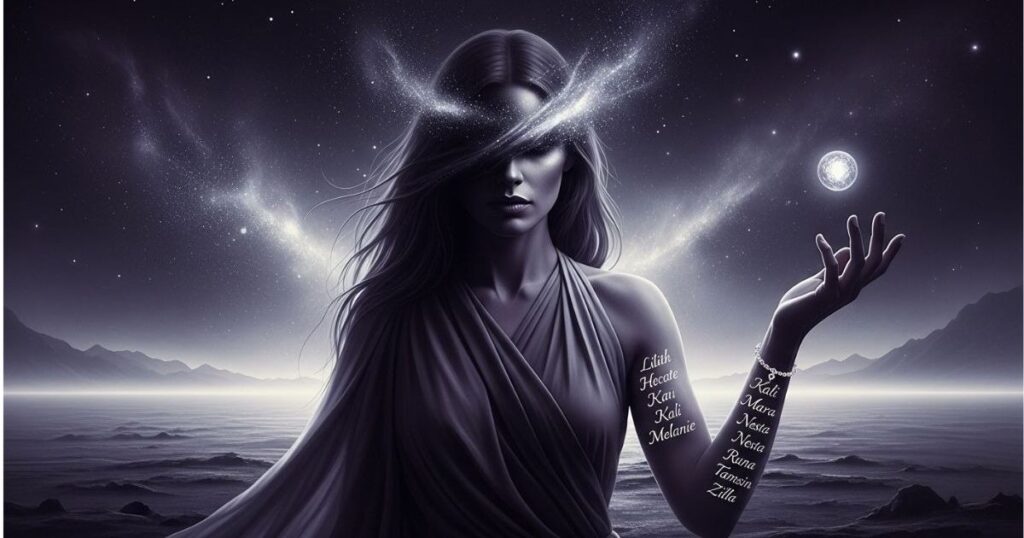
Japanese culture has one of the richest philosophical relationships with the concept of void. Rooted in Zen Buddhism and the teachings of Miyamoto Musashi’s Book of Five Rings, the void in Japanese tradition represents the highest state of masterynot absence, but perfect presence beyond technique.
Mu (無)Nothingness or emptiness; the most direct Japanese expression of the void concept in Zen Buddhism.
Ku (空)Empty, sky, or void; the fifth element in Japanese martial philosophy. Represents the state beyond all elements.
Yami (闇)Darkness; the void of night from which nothing is visible and everything is possible.
Kuro (黒)Black; the color most associated with void and the absence of light in Japanese aesthetics.
ChikaraCan mean void among other interpretations; a name with multiple kanji possibilities depending on the characters chosen.
UtsuhoEmptiness or empty hole; an Old Japanese unisex name that directly expresses the concept of hollow void.
RinkuVoid, sky, empty; a male name with rich spatial and philosophical connotations in Japanese.
TakuEmpty, sky, void, or vacant; a boy’s name that connects emptiness with infinite potential.
Kage (影)Shadow; the dark void created by the absence of direct light.
Shin’en (深淵)Abyss or deep void; a compound name meaning the bottomless depths of emptiness.
Ankoku (暗黒)Darkness or dark void; used in Japanese storytelling for powerful antagonists or cosmic forces.
Sora (空)Sky, emptiness, or void; one of the most popular Japanese names that carries the meaning of open, infinite space.
MeifuThe dark realm of the dead in Japanese mythology; a name rooted in the void of the afterlife.
KokūVoid of the sky; a compound of ko (empty) and ku (sky), representing absolute spatial emptiness.
Mugen (無限)Infinite void or boundlessness; represents the concept of endless emptiness without boundary.
Ancient Names That Mean Void or Emptiness
Reaching back to the oldest human civilizations reveals names and words for void that carry remarkable depth:
Tehom (Hebrew)The primordial deep void mentioned in Genesis; the waters of emptiness over which creation moved.
Tiamat (Babylonian)Primordial goddess of the sea and abyss; from ancient Mesopotamian religion, she represents the void of chaotic primordial waters.
Apep (Egyptian)The serpent of chaos and void; the ancient enemy of Ra, embodying the darkness and emptiness that threatens order.
Tartarus (Greek)The deep abyss beneath the underworld; the ultimate void in Greek cosmology, older even than the gods.
Inannu (Sumerian)Associated with the void of descent; connected to the journey into the underworld’s emptiness.
Nammu (Sumerian)The primordial sea from which all things emerged; the original void of creation in Sumerian myth.
Nut (Egyptian)The sky goddess; stretched across the void of space, her body forming the emptiness above the earth.
Nox (Latin)Night; the Roman equivalent of Nyx, representing the void of darkness that covers the world.
Vacuus (Latin)Void or empty; the direct Latin word for a vacuum of space, used in philosophical and scientific contexts.
Aether (Greek)The upper void of sky and space; the personification of the bright upper air and cosmic emptiness above the clouds.
Male Names That Mean Void and Darkness
These names combine the concepts of void and darkness for maximum mythological and aesthetic power:
Erebus, Abaddon, Moros, Kurai, Draven, Noctis, Thanatos, Umbrus, Tenebris, Vexen, Oblivion, Shadow, Hollow, Phantom, Spectre, Dusk, Gloom, Rift, Fade, Ashen
Female Names That Mean Void or Nothingness
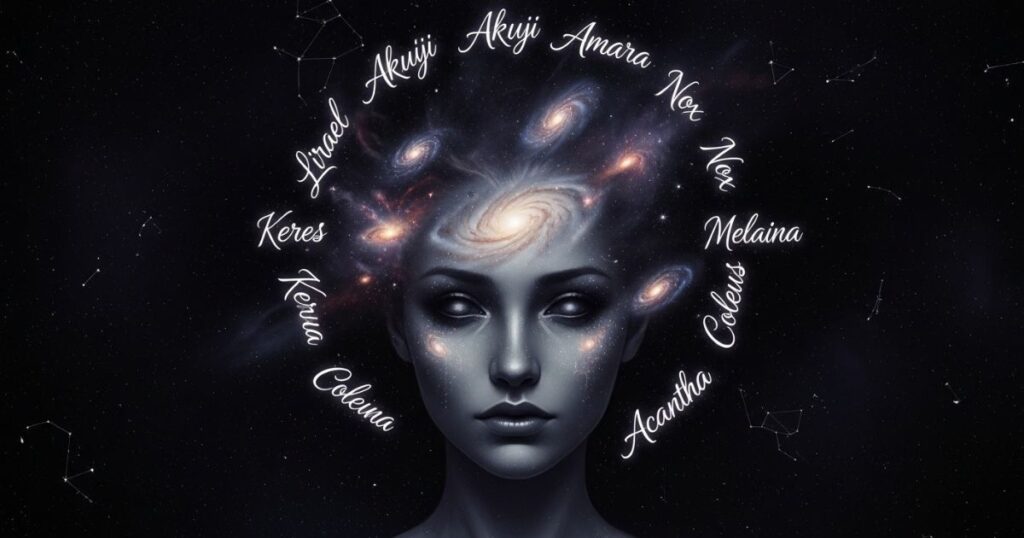
These feminine names capture the elegance hidden within emptiness:
Nyx, Caligo, Lacuna, Umbra, Penumbra, Achlys, Vesper, Mara, Lilith, Sable, Noire, Thalassa, Yami, Alaya, Sunyata, Vespera, Meifu, Hecate, Nott, Vanya
Fantasy Character Names That Mean Void
These names are specifically crafted or adapted for use in fantasy fiction, role-playing games, and creative worldbuilding:
- Vanyra Elegant and dark; perfect for a void sorceress or shadow queen.
- Velora Mysterious and feminine; carries the energy of something lost to the void.
- Noctiveth A compound of noctis (night) and void; suitable for a cosmic entity.
- Kaelthas Inspired by darkness and void; a powerful name for a fallen or cursed character.
- Zyron Invented but rooted in void aesthetics; suitable for a science fiction void entity.
- Vexara Feminine and sharp; a sorceress who draws power from emptiness.
- Nullis From null; a character who exists in the space between worlds.
- Abyssara From abyss; a void guardian or ancient power.
- Shadevyn Combining shade and void; a rogue or shadow assassin.
- Mortivex From mort (death) and void; a death-realm entity.
- Evervoid Poetic and expansive; a cosmic being of infinite emptiness.
- Riftborn One who was born from the void rift between worlds.
- Lacunara From lacuna; a female character who exists in the gaps between realities.
- Voidmancer A practitioner of void magic; a class name or character identity.
- Hollowmere A place name or character from the void realm.
Mythological Names That Mean Void
These names come directly from world mythology and carry the authentic weight of ancient void symbolism:
| Name | Origin | Mythological Role | Meaning |
| Chaos | Greek | First primordial void | Yawning emptiness |
| Erebus | Greek | Deity of deep darkness | Shadow void |
| Nyx | Greek | Goddess of night | Void of darkness |
| Tartarus | Greek | Deepest underworld void | Bottomless abyss |
| Tiamat | Babylonian | Primordial sea goddess | Chaotic void |
| Apep | Egyptian | Serpent of chaos | Anti-creation void |
| Ginnungagap | Norse | Primordial void | Yawning emptiness before creation |
| Nott | Norse | Personification of night | Dark void |
| Abaddon | Hebrew | Angel of the abyss | Destruction void |
| Kali | Hindu | Dark mother goddess | Void of time |
| Nammu | Sumerian | Primordial sea | Original creative void |
| Achlys | Greek | Death mist spirit | Pre-void of death |
Japanese and Greek Names Meaning Void (日本とギリシャの名前)
Both Japanese and Greek traditions approach the void with philosophical sophistication. Here is a direct comparison:
| Japanese Name | Meaning | Greek Equivalent | Meaning |
| Mu (無) | Nothingness | Chaos | Primordial void |
| Ku (空) | Void/sky | Aether | Upper void |
| Yami (闇) | Darkness | Erebus | Deep darkness |
| Shin’en | Abyss | Tartarus | Deep void |
| Kage | Shadow | Umbra | Shadow void |
| Sora | Sky/emptiness | Uranus | Heavenly void |
| Utsuho | Empty hole | Lacuna | Empty gap |
| Kokū | Void of sky | Abyss | Bottomless void |
Baby Boy Names That Mean Void
For parents drawn to the depth and uniqueness of void-themed names, these options work beautifully in real-world naming contexts:
Mu, Kuro, Sora, Rinku, Taku, Chikara, Vayun, Nihil, Null, Draven, Aether, Limen, Dusk, Oberon, Zephyr, Kairos, Erebos, Noctis, Cipher, Vale
Each of these names works in everyday life while carrying a profound meaning that grows with the child. They are unusual enough to be distinctive, grounded enough in real language roots to feel credible.
Dark Aesthetic Names Meaning Emptiness
These names appeal to the dark aesthetic community, gothic literature fans, and anyone who finds beauty in shadow:
Hollow, Specter, Wraith, Ashen, Fade, Gloom, Pallor, Penumbra, Lacuna, Hush, Stillness, Fracture, Dusk, Tenebris, Whisper, Umbra, Wane, Vex, Liminal, Rift
Unique Mystical Names That Mean Void
For those seeking something genuinely rare and spiritually resonant:
Sunyata, Shunyata, Alaya, Nirvana, Nirvan, Epsilon, Voidan, Limen, Omni, Salvatrix, Vacuus, Oblivion, Nothus, Lacunara, Abyssara, Khaossyn, Voidara, Nihilara, Aetheron, Riftmere
Celestial and Cosmic Names That Mean Void
Space itself is the greatest void of all. These names connect the concept of emptiness to the cosmic scale:
Aether, Cosmos, Void, Nebula, Singularity, Eventide, Eclipse, Zenith, Nadir, Horizon, Firmament, Ether, Expanse, Infinita, Vortex, Aphelion, Perihelion, Quasar, Pulsar, Nullpoint
Names Representing Empty Space and Abyss
These names specifically evoke the concept of deep, unmeasured empty space:
Abyss, Chasm, Rift, Gulf, Lacuna, Hollow, Vale, Glen, Vacuus, Vacuum, Depth, Void, Deep, Nadir, Pit, Trough, Basin, Canyon, Cavern, Nihility
Names Symbolizing Darkness and Shadow
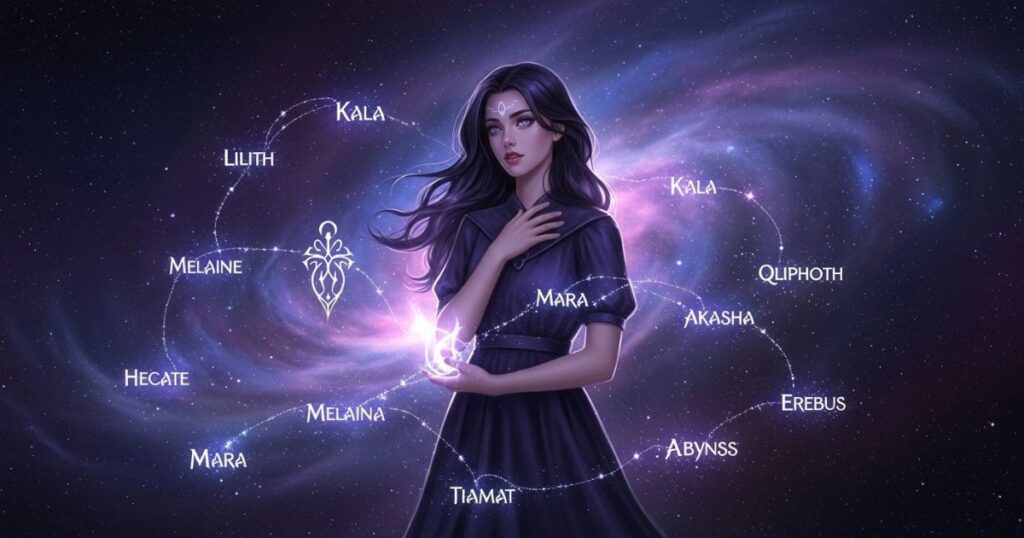
Darkness and void are deeply intertwined in every culture’s mythology and language:
Umbra, Penumbra, Nyx, Nox, Kali, Yami, Kuro, Draven, Sable, Noire, Tenebris, Caligo, Shadow, Shade, Dusk, Nightfall, Crepuscule, Eventide, Achlys, Moros
Names Inspired by Cosmic Emptiness
Drawing from astrophysics and cosmology, these names connect void to the scientific infinite:
Singularity, Eventide, Horizon, Quasar, Pulsar, Vacuum, Nadir, Zenith, Parallax, Aphelion, Perihelion, Nebula, Void, Entropy, Abyssa, Nullpoint, Cosmos, Ether, Eclipse, Expanse
Names Derived from Ancient Void Deities
Every ancient civilization had a deity connected to the void. These names come directly from those traditions:
Chaos, Erebus, Nyx, Tartarus, Tiamat, Apep, Ginnungagap, Nott, Abaddon, Kali, Nammu, Achlys, Nut, Nox, Aether, Moros, Tehom, Inannu, Apsu, Tethys
Names Connected to Silent Emptiness
Silence is the auditory equivalent of void. These names carry that quality of profound stillness:
Hush, Stillness, Murmur, Whisper, Silence, Mute, Calm, Still, Quiet, Peace, Serene, Tranquil, Solace, Vesper, Vestige, Lacuna, Penumbra, Limen, Threshold, Hollow
Names Reflecting Infinite Void Concepts
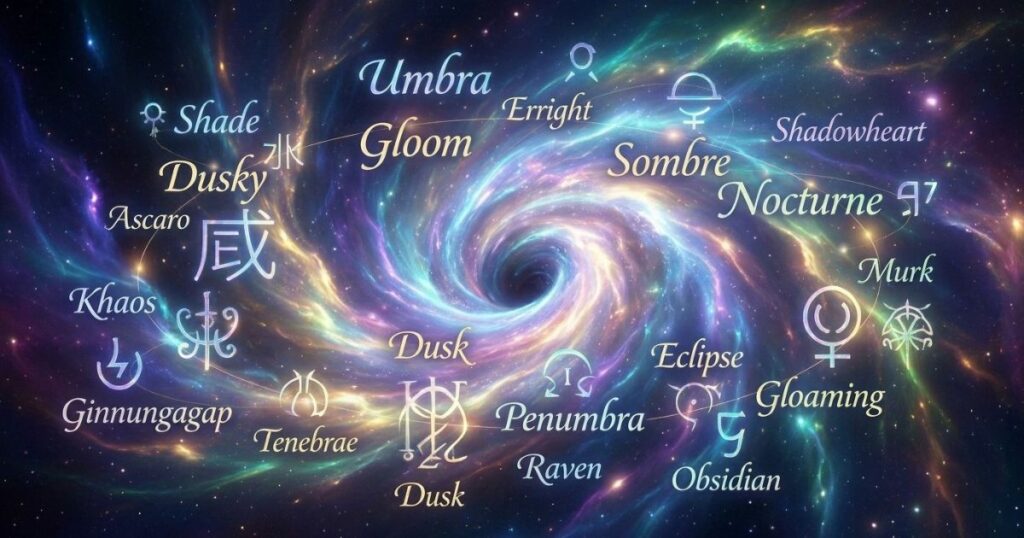
These names express the philosophical concept of endless, boundless emptiness:
Mugen, Infinite, Boundless, Eternal, Endless, Limitless, Vast, Expanse, Cosmos, Abyssa, Infinita, Perpetua, Evervoid, Nullis, Nihility, Omnivoid, Voidal, Aetheron, Chaotica, Vacuity
Names Symbolizing Mysterious Nothingness
Mystery and nothingness overlap in the most poetic void names:
Nihil, Null, Void, Cipher, Zero, Blank, Numen, Enigma, Arcane, Crypta, Mystis, Occult, Arcana, Obscura, Tenebra, Lacuna, Umbral, Abyssa, Specter, Wraith
Names Representing Primordial Emptiness
The void that existed before creation is the oldest void of all:
Chaos, Ginnungagap, Tehom, Nammu, Tiamat, Apsu, Aether, Nyx, Erebus, Tartarus, Khaos, Achlys, Nott, Inannu, Kali, Nun (Egyptian), Apep, Nox, Void, Primordius
Names Evoking Desolate Emptiness
Desolation carries a different flavor of voidthe emptiness of loss and abandonment:
Hollow, Barren, Desolation, Wastrel, Mara, Exile, Solitude, Forsaken, Forlorn, Vestige, Remnant, Ruin, Fade, Wane, Pale, Ashen, Dusk, Twilight, Dim, Gloaming
Names Inspired by Void Philosophy
Philosophical traditions from East and West have both explored the void deeply:
Sunyata, Mu, Shunyata, Nirvan, Nirvana, Alaya, Ku, Nihil, Vacuus, Oblivion, Limen, Cipher, Null, Zero, Epsilon, Entropy, Void, Liminal, Threshold, Abyssa
Names Reflecting Shadowy Void Realms
Dark underworld and shadow realm names carry an otherworldly void energy:
Erebus, Tartarus, Meifu, Hades, Sheol, Oblivion, Shadowmere, Hollowmere, Nightrealm, Voidrealm, Duskfall, Penumbra, Darkholm, Abyssara, Gloomhaven, Noctiveth, Shadowfen, Umbralith, Lacunara, Desolara
Names Capturing Ethereal Emptiness
Ethereal emptiness is light, delicate, and beautiful despite its nothingness:
Vesper, Vestige, Whisper, Lacuna, Penumbra, Mist, Vapor, Haze, Veil, Gossamer, Ether, Sora, Noire, Sable, Fade, Drift, Reverie, Murmur, Pallor, Luminance
Names Symbolizing Endless Void Depths
The deepest possible voidthe kind with no floor and no ceiling:
Abyss, Chasm, Tartarus, Shin’en, Depth, Deepwater, Abaddon, Abyssara, Nadir, Horizon, Infinita, Mugen, Eternal, Boundless, Expanse, Void, Nullpoint, Singularity, Nullis, Evenfall
Names from Void Associated Phenomena
Natural and supernatural phenomena connected to the concept of void:
Eclipse, Rift, Fracture, Singularity, Horizon, Entropy, Vacuum, Collapse, Eventide, Nadir, Zenith, Aphelion, Resonance, Warp, Anomaly, Vortex, Nexus, Liminal, Cipher, Threshold
Expert Tips for Finding Unique Names That Mean Void
Finding the right void name for your specific purposewhether character naming, baby naming, or worldbuildingrequires a thoughtful approach. Here are the strategies that work best:
Start with language, not just meaning. The most distinctive void names come from exploring languages directly. Look at Sanskrit, Japanese, ancient Greek, Latin, Norse, and Egyptian for words that mean empty, dark, abyss, or nothing. These source words become compelling names with authentic roots.
Consider the philosophical tradition. A character rooted in Eastern philosophy benefits from a Sanskrit or Japanese void name. A character in a Western mythology-inspired world fits better with Greek or Latin options. Match the name to the cultural context it inhabits.
Test the sound. Void names should feel right when spoken aloud. Names with open vowels like Sunyata, Erebus, or Abyssa carry a resonant, open quality that mirrors the concept of emptiness. Hard consonants like in Abaddon or Nihil create a sharp, dark energy.
Layer the meaning. The best void names carry more than one meaning. Mu in Japanese means nothingness, but in the context of Zen Buddhism it carries an entire philosophy of liberation. Choosing names with layers rewards both the namer and anyone who encounters the name later.
Check cultural context. Some void names carry heavy sacred or cultural weight. Using a name like Kali, Abaddon, or Chaos in a context that feels disrespectful to their origin tradition should be handled carefully, especially in published works.
How to Choose the Perfect Names That Mean Void
Narrowing down a list this large requires clear criteria. Ask yourself these questions:
Is this name for a real person or a fictional character? Real-world baby names need to be livable across a lifetime. Fictional names can be more extreme in sound and meaning.
What is the cultural or narrative context? Match the cultural origin of the name to the world the name will inhabit.
A character in a Norse fantasy world carries Ginnungagap-inspired names with more authenticity than a character in a Japanese mythological setting would. Getting this alignment right makes names feel earned rather than borrowed.
Does the sound work? Read the name aloud five times. If it flows naturally and feels right, it probably is.
Does the layered meaning add value? The best names mean something on multiple levelsthe void and something beyond the void.
Is it truly unique? Search the name before committing. The goal is distinction, not accidental repetition.
How will it age? A name that feels exciting and novel at the moment of choosing needs to carry weight across time. Void names from ancient traditions have already proven this testErebus is no less powerful today than it was two thousand years ago.
When choosing from the newer or invented entries in this list, ask whether the name will feel as resonant in twenty years as it does today.
Does it honor its source? Names from sacred or cultural traditions deserve respect. Using Kali, Abaddon, or Sunyata in a creative context that trivializes their origins can be both creatively shallow and culturally disrespectful.
Research the tradition behind each name you consider, and use that knowledge to handle the name with the care its history deserves.
Personal Experience
Over years of exploring naming traditions for fiction and research, the most striking discovery is how consistently cultures across time and geography have returned to the void as a source of powerful naming.
Japanese Zen philosophy, ancient Greek cosmology, Sanskrit Buddhist tradition, Norse creation myth, and Hebrew sacred text all treat the void not as nothing but as the most fundamental somethingthe potential-filled emptiness that contains all possible futures.
Choosing a name from this tradition connects the bearer to that ancient, universal wisdom, regardless of whether they are a warrior in a fantasy novel or a child growing up in the real world.
What makes these names particularly compelling for modern use is how they resist being easily defined.
When you introduce a character named Erebus or Sunyata, readers instinctively sense that this person exists on a different planethat there is something vast and unresolved about them.
That quality of contained mystery is extraordinarily rare in naming, and it is what keeps void names feeling fresh even after thousands of years of use across dozens of cultures.
For parents, the fear of naming a child something too unusual often prevents them from reaching toward truly meaningful names. But names like Sora, Mu, Dusk, or Aether are unusual without being unlivable.
They are distinctive without being impossible. They carry ancient depth without requiring explanation.
A child named Sora carries a name that means void, sky, and infinite possibility all at onceand grows into it naturally, because names with genuine meaning tend to suit their bearers in ways that trendy or invented names simply cannot.
The void, after all, is not emptiness. It is everything that has not yet happened. Naming something for the void is naming it for potential itself.
Frequently Asked Questions
What are some names that mean void?
Top names include Nihil (Latin), Erebus (Greek), Mu (Japanese), Sunyata (Sanskrit), and Nyx (Greek), each carrying deep void symbolism from their original traditions.
Are there Japanese names that mean void?
Yes, Japanese has many void names including Mu (無, nothingness), Ku (空, sky/void), Yami (darkness), Sora (sky/emptiness), and Utsuho (empty hole).
Which Greek names mean void?
Key Greek void names include Chaos (primordial void), Erebus (deep darkness), Nyx (night goddess), Tartarus (bottomless abyss), and Aether (upper void of sky).
Are there female names that mean void?
Yes, including Nyx (Greek), Caligo (Latin), Lacuna (Latin), Umbra (Latin), Sunyata (Sanskrit), Achlys (Greek), and Alaya (Sanskrit/Buddhist).
What male names mean void?
Strong male void names include Nihil, Erebus, Abaddon, Khaos, Moros, Draven, Tenebris, Shunyata, Null, and Taku, each drawn from distinct cultural traditions.
Are void names good for fantasy characters?
Absolutely. Void names immediately establish mystery, power, and philosophical depth for any character typevillain, hero, deity, or wanderer.
Do baby names that mean void exist?
Yes, names like Sora, Mu, Kuro, Rinku, Dusk, Aether, and Vale work well as real baby names while carrying meaningful void symbolism.
What language has the most names meaning void?
Sanskrit and Japanese have the richest void naming traditions, closely followed by ancient Greek and Latin. All four languages treat the concept of void with philosophical sophistication.
What do names meaning emptiness represent?
They represent infinite potential, spiritual liberation, mystery, the unknown, cosmic space, and the silence before creationnot absence, but the purest possibility.
Why choose names that mean void?
Void names are rare, deeply meaningful, linguistically rooted in ancient traditions, and carry a philosophical resonance that conventional names cannot match.
Conclusion
Names that mean void are among the most powerful, meaningful, and linguistically rich choices available to writers, worldbuilders, parents, and anyone seeking a name that says something profound. From the Buddhist depths of Sunyata to the Greek primordial darkness of Erebus, from the Japanese philosophical stillness of Mu to the Norse yawning emptiness of Ginnungagap, these names carry the weight of cultures that understood the void not as nothing but as everything waiting to become.
With 700 plus names explored across every category, origin, and context, this collection gives you everything you need to find the perfect void name for any purpose. Use them with intention, match them to your context, and let the depth of their meaning speak for itself.